About Us
The Chambord building was inaugurated on 30 January 1976. The massive 15 story building stands on a 4,2 hectare hillside property overlooking vast areas of the east of Pretoria. It was first used as housing for the South African Police service. In 1984 it was registered under the sectional title act and private ownership of units commenced. In 1985 the first board of trustees was elected.

The building consists of a foyer, 4 levels of basement parking and 11 floors of residential units. Each floor has 4 three-bedroom corner units, 8 two-bedroom units, 4 one-bedroom units, 1 bachelors unit and a storeroom. Adjacent, to the west of the main building, a swimming pool, kids splash pool, braai facilities, children’s playground and an ablution block can be found.
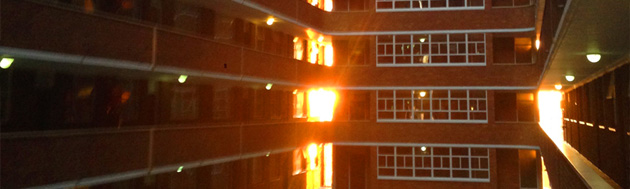
The unique construction of the building, with an enclosed central courtyard, ensures that all units have stunning views towards the north or south.
What is the origin of the name Chambord?:
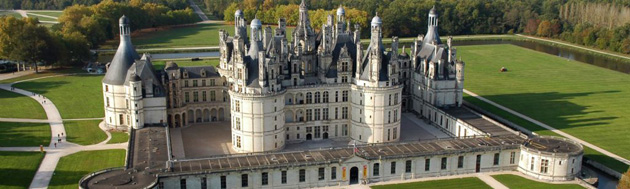
The name of Chambord, as well as its neighbouring apartment block, Cheverny and the suburb to which these two properties belong, has their origin in France. La Montagne translates as "the mountain" in French. The suburb is situated on a hill. This must have been the inspiration for the name La Montagne. Both Chambord and Cheverny are famous castles ("chateaux" in French), close to one another, in the Loire Valley in France
The royal Château de Chambord at Chambord, Loir-et-Cher, France, is one of the most recognisable châteaux in the world. The building, which was never completed, was constructed by King Francis I of France. It is famous for its many towers and spires.
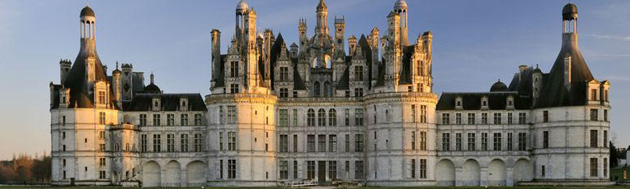
Château de Chambord was dreamed up by King François I, and is the biggest and most prestigious of all the French Renaissance Châteaux. No one knows the architect, but this masterpiece seems to have been inspired by sketches by the Italian master, Leonardo da Vinci, particularly the famous double-helix staircase.. Chambord was construction from 1519 to1547.
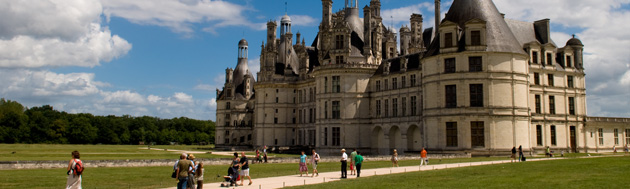
In 1792, in the wake of the French Revolution, some of the furnishings were sold and timber removed. For a time the building was left abandoned, though in the 19th century some attempts were made at restoration. During the Second World War, art works from the collections of the Louvre and the Château de Compiègne were moved to the Château de Chambord.
The Castle of Chambord is a World Heritage site by UNESCO since 1965. The château is now open to the public, receiving more than 700,000 visitors a year.